Learning through stories: space, animals, dinosaurs and how things work
"Why is the sky blue?" "How do birds fly?" "Where does the moon go in the morning?" Curious children ask hundreds of questions, and a short, well-told story is one of the best ways to answer them. Facts wrapped in an adventure are easier to remember than facts on their own, and bedtime is a calm time when children really listen.
Why stories help children learn
A child can forget a list of facts quickly. A character who travels to the moon and notices it has no air is much harder to forget. Stories give facts a place to live: a beginning, a problem and an ending. They also hold attention, and they connect learning with feeling safe and close to you.
What makes a good educational story
- One idea per story. Why the moon changes shape, or how a seed becomes a tree. One idea is enough.
- Accurate facts, told simply. The adventure can be imaginary. The science should be real.
- The child as the explorer. Children learn best when they are in the story, asking the questions.
- A question to carry away. End with something to wonder about tomorrow.
- Age-appropriate language. Short sentences for ages 2 to 4, a bit more detail for 5 to 8.
Topics children love
- Space. Rockets, planets, the moon, stars, and why we have day and night.
- Animals. How they sleep, build homes, find food and look after their young.
- Dinosaurs. What they ate, how we know about them, and what became of them.
- Nature. Seeds, rain, rivers, the seasons, and the life in a puddle.
- How things work. Bridges, trains, bicycles, and why a boat floats.
Turn your child's curiosity into a story
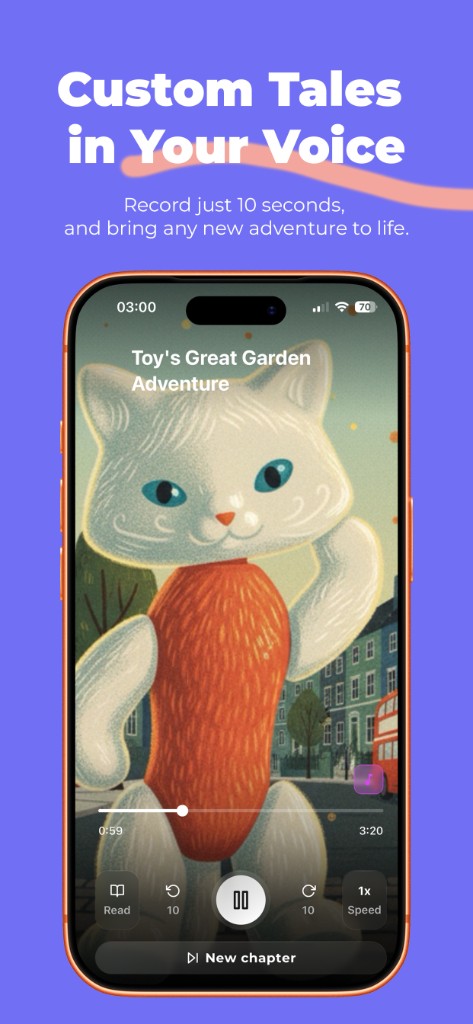
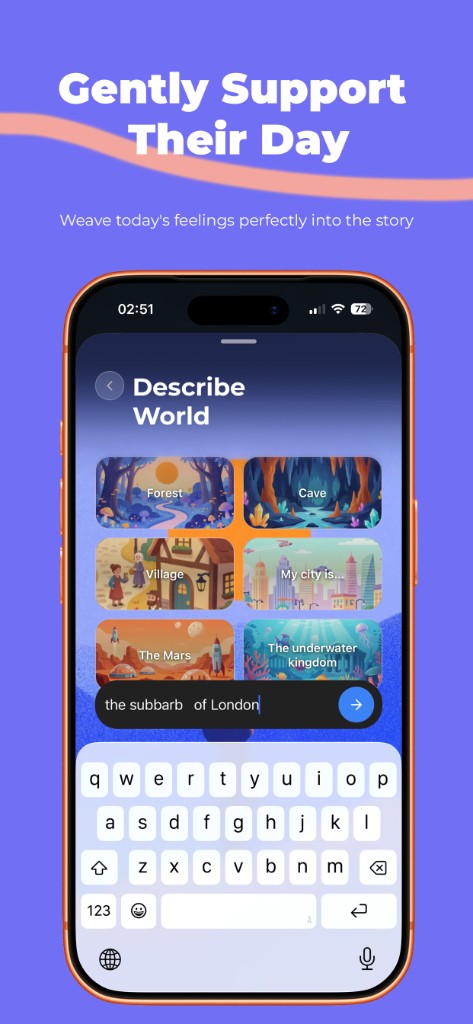
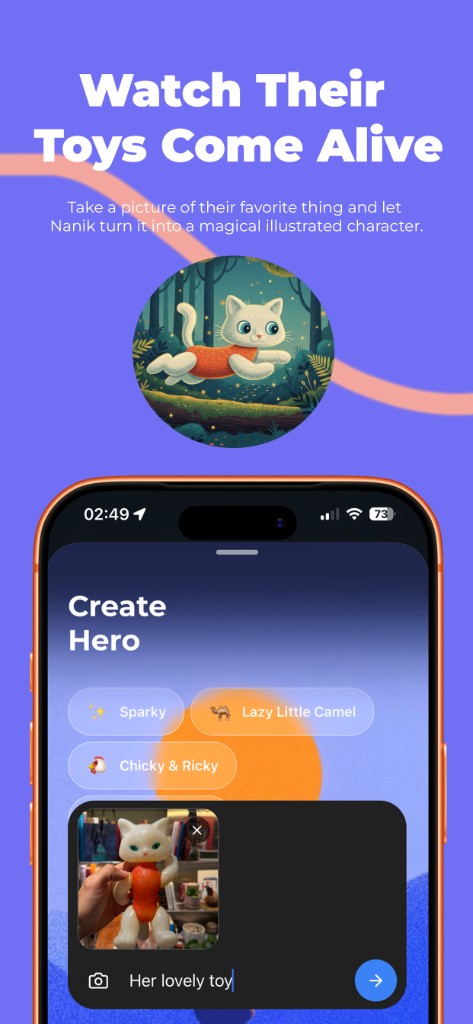
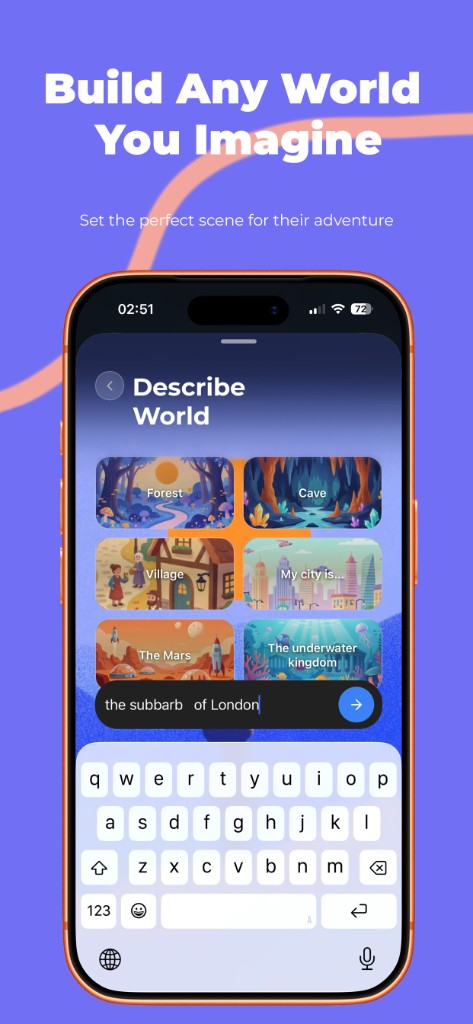
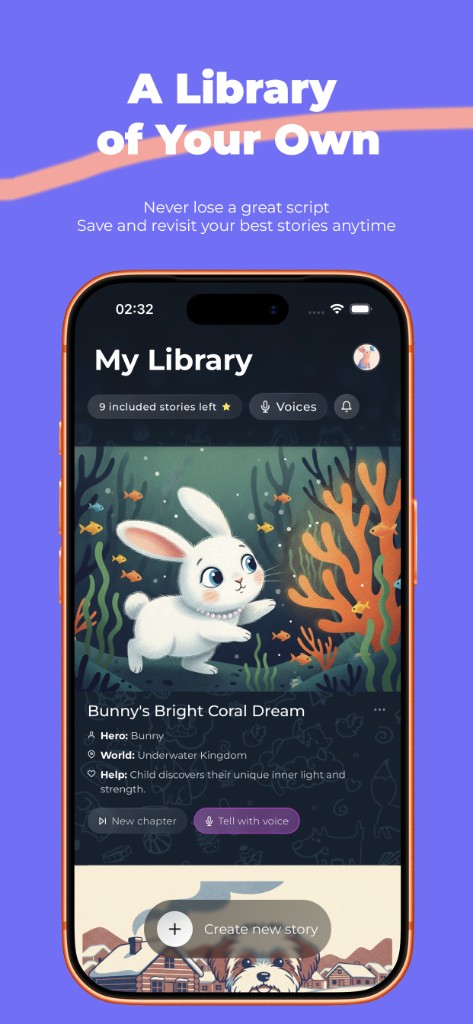
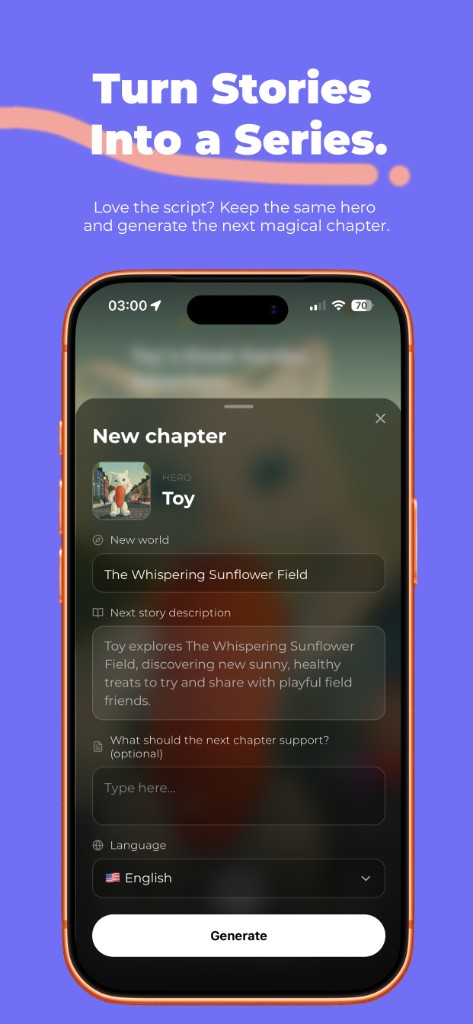
Whatever your child asked today, you can turn it into a story tonight. In Nanik you type what they are curious about, add their name and age, and get a short illustrated story where they go on the adventure. You can choose the language, and have it read in your own voice. Try it in the box above.
Sample story: Luna and the Moon's Pull
Luna was a curious little girl who lived in a house by the sea. Every evening she sat on the beach and watched the waves.
One night, she noticed something strange. In the morning, the sea had been far out, and she could walk on the wet sand. But now the water was high, right up near the dunes.
"Where does the sea go?" she asked. "And why does it come back?"
Just then, a soft silver light spread over the water, and a gentle voice said, "I can tell you."
Luna looked up. The moon was big and bright, hanging low over the waves. "Me?" she whispered.
"I am very far away," said the moon, "but I pull on the Earth, just a little. The Earth's oceans feel my pull, and the water heaps up into a bulge on the side facing me, and another on the side far from me. A bulge of water is a high tide. As the Earth turns, your beach moves out of the bulge and the sea slips back down. That is a low tide."
Luna's eyes grew wide. "You move the whole sea? From so far away?"
"I do," said the moon. "The Earth spins all the way around every day, so your beach passes through both bulges. In most places, the tide comes in and goes out twice a day."
Luna thought about that. "And is that why you change shape?" she asked. "Sometimes you are round, and sometimes just a sliver."
"Not quite," said the moon, with a little glow of a smile. "I always have one side lit up by the sun. As I travel around the Earth, you see more or less of that sunlit side. That is why I look like a full moon, a half moon, or a thin curved banana. It takes me about a month to go all the way around."
Luna lay back on the cool sand and looked up. For the first time, she really saw the moon, and the stars twinkling beyond it, and she felt very small and very lucky all at once.
"Thank you, Moon," she said.
"Goodnight, Luna," said the moon. "Tomorrow, watch the sea again, and see if you can spot my pull."
Luna smiled, and as the waves whispered in, and out, and in again, she fell fast asleep.
The end.
Ways to keep the curiosity going
- Ask "What do you think happens next?" before turning the page, and let your child guess.
- The next day, point out the real thing: the moon, a puddle, a bird, a bridge.
- Look up one more fact together, and let your child lead.
- Keep a "wonder jar" of questions to turn into future stories.
Related: stories for new experiences · stories about big feelings · bedtime stories in your own voice