Bedtime fears: why they happen and how a story can help
Many children who were happy all day become worried the moment the lights go out. A fear of the dark, a bad dream that keeps coming back, or not wanting to sleep alone are all common, especially between about 2 and 8 years old. Imagination grows faster than a child's ability to tell what is real, and bedtime is the quietest, least distracted part of the day, so worries get loud.
Why a story works better than "there's nothing to be afraid of"
Telling a frightened child that nothing is wrong rarely helps, because to them something clearly is. A story takes a different route. The worry happens to a character, not to your child, which makes it safer to look at. The character feels the same fear, tries something, and finds the night is manageable. Your child gets to rehearse being brave without being put on the spot.
What helps at bedtime
- Name the feeling first. "It sounds like the dark feels scary tonight" tells your child you take it seriously.
- Keep the routine short and predictable. Bath, pajamas, a story, lights out. The same order every night is calming in itself.
- Pick a story where the character solves it gently. Avoid stories that make the fear bigger or the monster real. The best ones end with the character calm and sleepy.
- Use a small tool. A night-light, a soft toy as a guard, or a "brave breath" (in through the nose, out slowly) gives your child something to do.
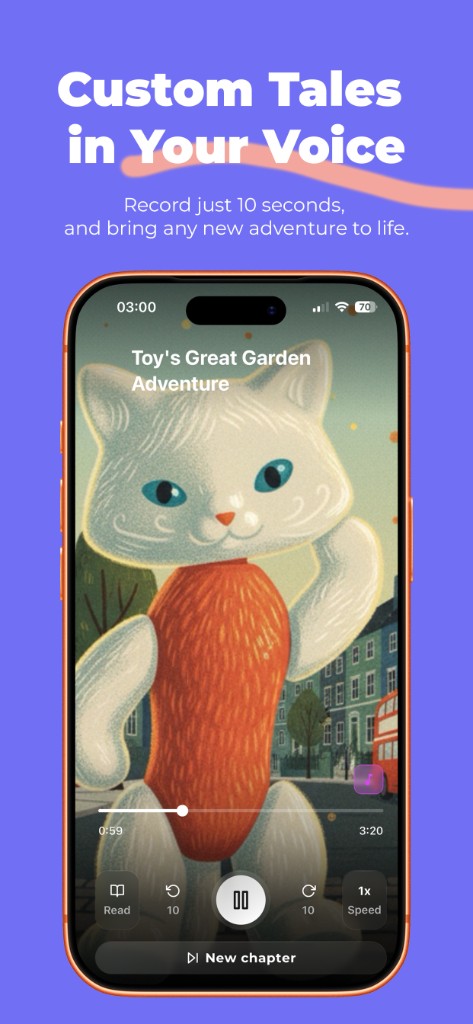
- Stay calm yourself. A slow, quiet voice does a lot of the work. This is one reason many parents like stories narrated in their own voice, even on nights when they cannot be in the room.
A personalized story fits the exact fear
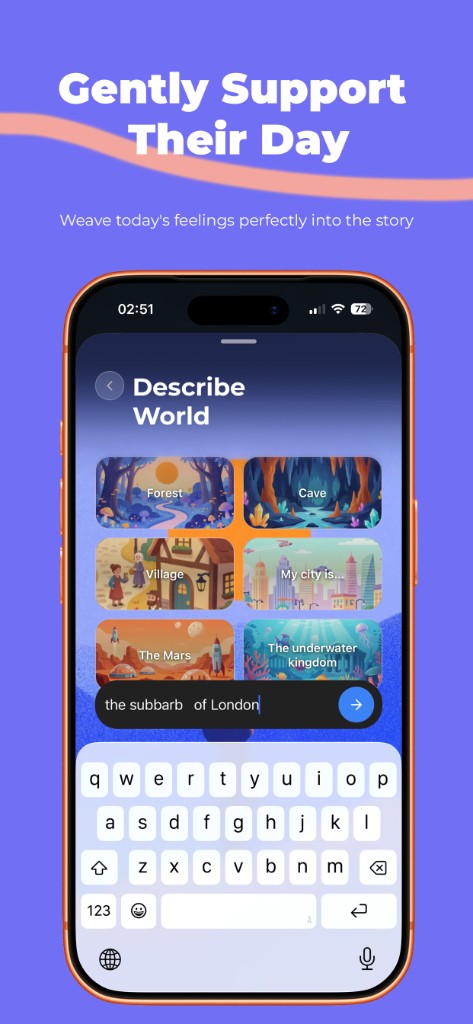
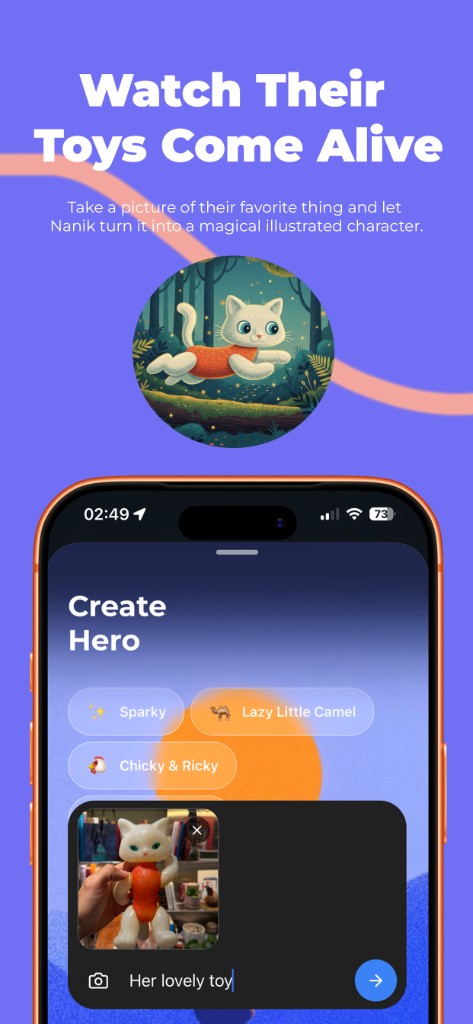
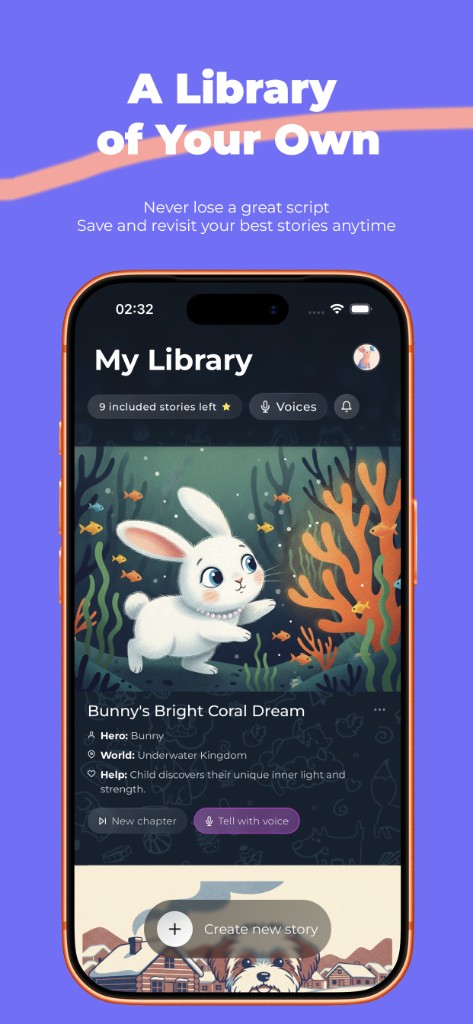
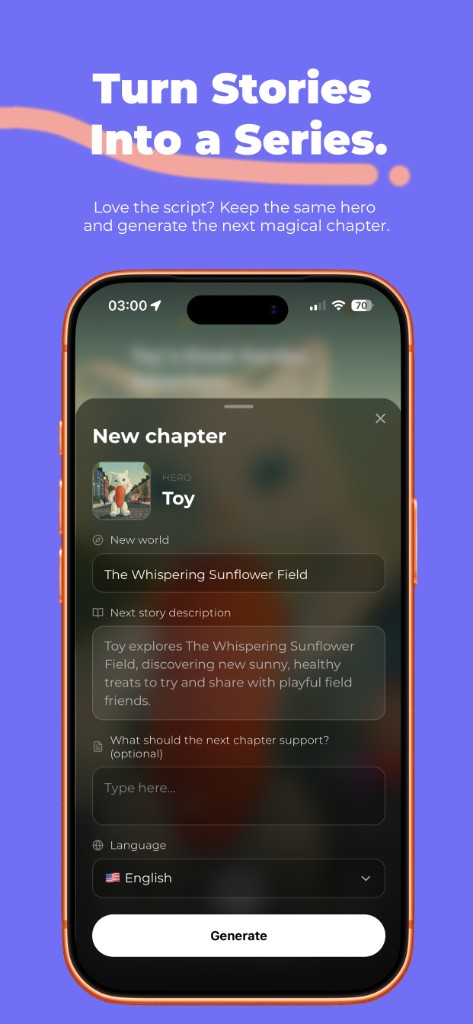
A generic book about the dark may not match what your child is worried about. Perhaps it is the closet, the sound of the heating, or being alone after a sibling moves rooms. With Nanik you describe what is happening at bedtime, add your child's name and age, and get a short calming story built around that worry, in any of 100+ languages. You can have it read in your own voice, so it feels like you are there. Try it in the box above.
Sample story: Milo and the Night Lantern
Milo was a small fox who liked everything about the day. He liked mud, and puddles, and racing the wind. But he did not like the dark.
Every night, when his mother turned off the lamp, the room changed. The coat on the door looked like a tall stranger. The shadow by the window looked like a giant paw. Milo pulled the blanket up to his nose and listened to his heart go thump, thump, thump.
One evening, his mother sat on the edge of his bed. "Milo," she said, "the night has a secret helper. Would you like to meet it?"
Milo peeked out from the blanket. "A helper?"
His mother opened her paw, and there, glowing softly, was a tiny lantern no bigger than an acorn. "This is the Night Lantern," she said. "It only shines for those who are brave enough to take three slow breaths."
Milo took one breath in, and let it out slowly. The lantern glowed a little brighter. He took a second breath. The glow spread across the ceiling like warm honey. On the third breath, the whole room lit up, gently, the color of a candle.
And Milo saw it clearly now. The tall stranger was only his coat. The giant paw was only the curtain, swaying a little in the breeze. The room was exactly the room he knew: his shelf, his slippers, his stuffed rabbit with one floppy ear.
"The dark is just the day, resting," said his mother. "Everything is still here. It is only sleeping, too."
Milo held the little lantern close. It was warm as a mug of milk. He took one more slow breath, and another, and the lantern's glow grew softer, and softer, until it was just a tiny golden spark by his pillow.
"Goodnight, coat," Milo whispered. "Goodnight, curtain. Goodnight, shelf."
And somewhere between the second goodnight and the third, Milo was fast asleep, with the Night Lantern glowing quietly beside him, all night long.
The end.
More ways to use stories for bedtime worries
- Read the same calming story for several nights. Repetition is part of how it works.
- Ask one gentle question afterward, such as "What helped Milo feel safe?" Do not quiz.
- If your child is worried about something specific, put it in the story directly, with a calm ending.
- On nights you are away, have the story read in your voice. See bedtime stories in your own voice.
When to get extra help
Occasional fears are a normal part of growing up. Talk to your child's doctor if fears are intense, if nightmares happen most nights, if your child avoids sleep for weeks, or if they seem very anxious during the day as well. A story is a gentle tool for everyday worries. It is not a substitute for professional help.
Related: stories about big feelings · stories for new experiences · compare bedtime story apps in your own voice